

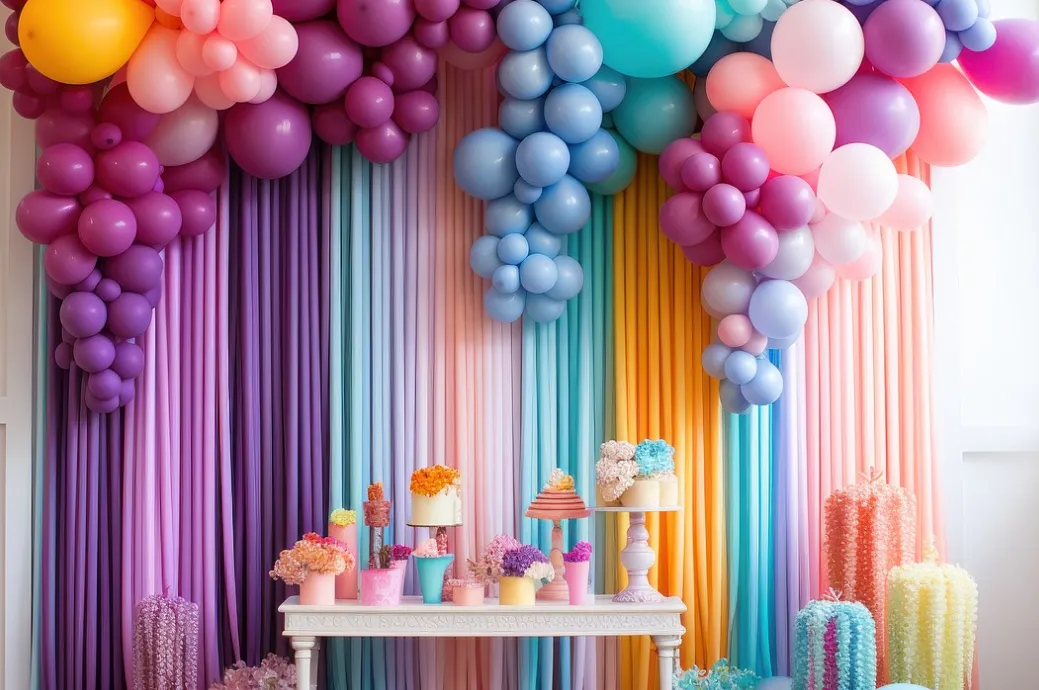
Planning your first decorated event comes with a long list of decisions, and most beginners underestimate how much the smallest materials affect the final result. Balloons are often the centerpiece of that planning, but the ribbon holding them in place, organizing them into arrangements, and giving the display its finished shape is just as important as the balloons themselves. When ribbon is chosen without thought, displays lose structure, balloons drift out of position, and the overall presentation falls short of what was imagined. Understanding how ribbon works before you begin saves time, reduces waste, and keeps your setup from unraveling mid-event.
What Balloon Ribbon Actually Is and Why It Matters
Balloon ribbon is a lightweight, flexible material used to tie, secure, and display inflated balloons for events ranging from birthday parties to corporate gatherings. It differs from standard gift wrap ribbon in its construction and purpose. Balloon ribbon is typically made to hold knots under light tension without cutting into latex, to curl predictably when scored against a firm edge, and to hold its shape over several hours without drooping or losing its decorative quality. For anyone building their first balloon display, understanding what this material is designed to do — and what it is not designed to do — sets realistic expectations from the start.
The category of balloon ribbon covers a wider range of products than most beginners expect. Colors, widths, textures, and material compositions vary significantly, and each variation affects how the ribbon behaves when tied, curled, or left to hang. Choosing the wrong type for your setting — outdoor versus indoor, for example — can cause problems that are difficult to fix once the event is underway.
The Role Ribbon Plays in Display Stability
A balloon without a properly secured ribbon is essentially uncontrolled. It can drift, rotate, or float beyond the reach of guests and decorators alike. Ribbon provides the connection between the balloon and whatever anchor point keeps it in place, whether that is a weight on a table, a fixed structure, or a bouquet arrangement. When that connection is weak — because the ribbon was tied too loosely, or because the material does not grip knots well — balloons migrate during the event, and what looked like a composed display at setup becomes scattered and inconsistent within an hour.
This is why material quality matters even at entry level. A ribbon that holds a knot reliably is not a luxury consideration; it is a basic requirement for any display you want to remain intact from the moment guests arrive until the event concludes.
Understanding Different Types of Ribbon for Balloon Use
Not all ribbon sold in craft and party supply contexts is designed for balloon applications. Standard satin ribbon, for instance, is woven in a way that resists curling and holds moisture, which can cause balloons to degrade faster when in contact with the ribbon for extended periods. Balloon-specific ribbon is typically a narrower, polypropylene-based product that is lightweight enough not to add downward drag on the balloon while still being strong enough to hold a secure knot. These distinctions are not always obvious from packaging, which is why beginners often end up with ribbon that looks appropriate but performs poorly.
Polypropylene vs. Other Materials
Polypropylene ribbon is the most commonly used material for balloon displays because it combines low weight with adequate tensile strength. It does not absorb water, which matters for outdoor events where morning dew or light rain can affect display quality. It also curls cleanly when dragged against a hard edge, making it straightforward to create the cascading ribbon effects commonly seen at parties and celebrations.
Other materials, including paper ribbon and fabric-based options, can be used for specific aesthetic purposes but generally require more setup time and do not perform as consistently over several hours. For a first event, starting with standard polypropylene balloon ribbon keeps the process manageable and the results predictable.
Width and Its Effect on Visual Balance
Ribbon width changes how a display looks and how easy the ribbon is to work with. Narrower ribbon creates a finer, more delicate visual line that works well for elegant or minimalist setups. Wider ribbon adds visual weight and can complement larger balloon arrangements where a thin ribbon would look out of proportion. For beginners, a mid-range width is usually the most forgiving choice — it is easy to tie, holds a knot without difficulty, and curls with minimal effort. Going too narrow makes tying harder, especially for those new to working with small components under time pressure.
How to Tie and Curl Ribbon Without Creating Problems
Tying balloon ribbon correctly is a skill that takes a small amount of practice but follows consistent logic. The goal is a knot that holds tension without slipping, positioned close enough to the balloon’s neck that there is no slack for the knot to travel upward. A loose knot creates exactly the kind of drift and instability described earlier. A knot tied too tightly on a very thin ribbon can cut into the latex of the balloon at the neck, weakening the seal over time and shortening the balloon’s lifespan during the event.
Curling Technique and When to Use It
Curling ribbon involves drawing it firmly across the blade of a pair of scissors or a rigid edge at a controlled angle. The ribbon responds to this tension by coiling into a spiral, and the tightness of that spiral depends on how quickly the ribbon is pulled and how much pressure is applied. Beginners often apply too little pressure, resulting in a slight wave rather than a defined curl. Applying consistent, firm pressure produces a tighter, more uniform curl that holds its shape for several hours.
Curled ribbon is most effective when used in clusters, either hanging from a balloon bouquet or tied to a weighted base arrangement. Single curled strands tend to look sparse. Grouping three or more curled ribbons of different lengths at a single tie point creates a layered visual effect that reads as intentional rather than accidental.
Managing Ribbon Length for Different Display Types
The length of ribbon you use depends on whether the balloon is meant to float at a height where guests can interact with it, display overhead as part of a ceiling installation, or remain close to a surface as a table centerpiece. Longer ribbon gives more visual movement but also creates a greater chance of entanglement in high-traffic areas. For indoor events where children are present, ribbon lengths should be considered carefully, as trailing ribbon at ground level can become a tripping hazard or an object that younger guests pull on, dislodging the display. The Consumer Product Safety Commission has long noted that ribbon and string materials used around young children require thoughtful placement to reduce the risk of entanglement.
Color Coordination and Practical Considerations
Color matching ribbon to balloons is not purely an aesthetic exercise. When ribbon and balloon colors are mismatched, the ribbon itself becomes visually distracting rather than a supporting element. For most event setups, ribbon should either match the balloon closely, complement the event’s color palette, or remain neutral. White and clear ribbon are safe choices when the balloon color is bold or complex, because they let the balloon remain the focal point without competing for attention.
Working with Multiple Colors at Once
Multi-color balloon arrangements require ribbon decisions for each balloon or cluster. Using a single ribbon color across a mixed balloon arrangement creates cohesion. Using multiple ribbon colors that correspond to each balloon can create a more dynamic effect but requires more planning to avoid looking cluttered. For a first event, sticking to one or two ribbon colors across the entire display simplifies the setup process and reduces the number of decisions made under time pressure.
Storing and Preparing Ribbon Before the Event
Ribbon arrives on rolls or in pre-cut lengths, and how it is stored before use affects how it performs. Ribbon stored in humid conditions, or left in direct sunlight, can lose its capacity to curl cleanly and may develop permanent bends or creases from the weight of the roll. Keeping ribbon in a cool, dry location and unrolling lengths only when needed reduces these problems. Pre-cutting ribbon to consistent lengths before setup begins saves time on the day of the event and allows for more uniform displays without the distraction of measuring during assembly.
Closing Thoughts
Balloon ribbon is a material most people buy without much thought, and that casual approach is often the reason first-time decorators run into avoidable problems. Understanding what the material is made of, how it behaves under different conditions, and how to work with it efficiently transforms what seems like a minor supply into a reliable part of a successful display. The fundamentals covered here — material type, width, tying and curling technique, color coordination, and pre-event preparation — form the practical foundation that makes the difference between a display that looks composed throughout the event and one that requires constant adjustment. Starting with that foundation, rather than learning it through trial and error at the event itself, is simply the more dependable way to work.