

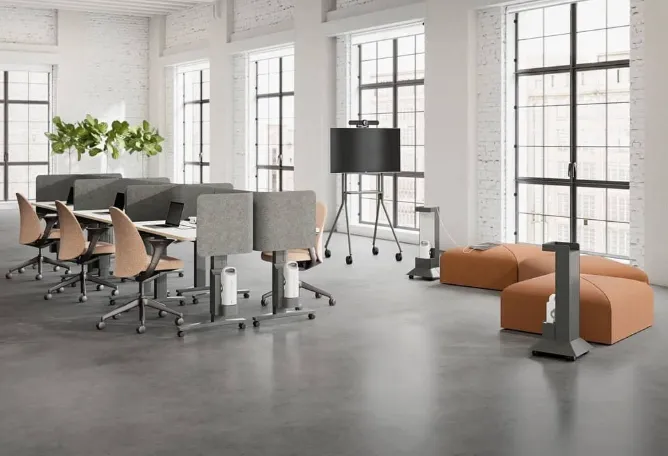
Style without function is just expensive decoration. Function without style is a warehouse. The best commercial offices find the balance, and the furniture is where that balance is either achieved or lost. A Leesman Index study of over 200,000 employees found that only 57% of workers felt their office environment enabled them to work productively. Choosing the right commercial furniture for offices is how you change that number in your favour.
What Does ‘Commercial Grade’ Actually Mean?
Commercial grade furniture is built for high-use environments. It goes through cycle testing, weight testing, and material durability assessments that residential furniture never faces. A commercial chair might be tested to 100,000 sit cycles. A cheap office chair from a retail store is not. That difference shows up fast in a busy office.
The Australasian Furnishing Research and Development Institute (AFRDI) sets standards for commercial furniture durability in Australia. Products rated AFRDI Blue Tick Level 6 are approved for demanding commercial use. That certification matters when you’re buying 50 chairs.
How Do You Balance Aesthetics Without Sacrificing Practicality?
Start with what the space needs to do. A legal office needs formality. A tech startup needs flexibility. A coworking space needs to work for strangers with different habits. Once the functional brief is clear, then you choose materials and finishes that match the brand tone.
Natural timber finishes create warmth and professionalism. Powder-coated steel frames signal durability and modernity. Upholstered pieces in neutral tones adapt across uses. The rule is simple. Choose materials that age well and clean easily. Avoid anything that looks great in a showroom but suffers under daily use.
Is Brand Consistency Worth Paying For?
It is. Visual consistency in an office is not vanity. It’s communication. When every piece of furniture speaks the same design language, the space reads as intentional. Clients notice. Staff notice. People form impressions of a company’s competence based on how its space is managed.
Inconsistent furniture also creates a practical problem. Chairs of different heights at the same table create discomfort. Mixed desk depths cause ergonomic mismatches. Consistency in furniture isn’t just pretty. It eliminates dozens of small friction points.
What Furniture Works Best for Meeting Rooms?
Meeting rooms do a lot of work. They host client pitches, internal strategy sessions, video calls, training sessions, and one-on-ones. One size of furniture doesn’t fit all of those scenarios.
Modular table systems that can be configured as one large table or broken into smaller clusters give meeting rooms genuine flexibility. Stackable or nesting chairs save space when the room needs to be cleared. A 2022 survey by Steelcase found that 87% of employees said they wanted more flexibility in how meeting spaces were arranged. Furniture that moves makes that possible.
How Should Reception and Common Areas Be Handled?
Reception is the first physical experience someone has with your company. A cluttered or worn reception area sets a tone that’s hard to recover from. The furniture here needs to be visually strong, immediately comfortable, and easy to maintain.
Lounge seating with supportive cushioning, clean lines, and easy-clean fabric or leather covers handles heavy use without looking tired. Coffee tables at comfortable heights, visible storage for brochures or technology, and good lighting around the seating all matter. These aren’t details. They’re the first impression.
Does Sustainable Furniture Matter to Employees?
More than most employers expect. A 2023 IBM Institute for Business Value report found that 67% of employees prefer to work for companies that actively demonstrate environmental responsibility. Sustainable furniture choices are a visible, tangible signal of those values.
Look for furniture made from FSC-certified timber, recycled metals, or fabrics with low VOC content. Several Australian manufacturers now offer take-back or refurbishment programs. That’s not just good PR. It reduces long-term replacement costs too.
What’s the Real Cost of Getting This Wrong?
When office furniture is mismatched, uncomfortable, or visually inconsistent, it creates a low-grade friction that compounds daily. Staff feel unsettled without knowing exactly why. Visitors form negative impressions they can’t quite name. Turnover in environments that score poorly for physical comfort is measurably higher.
A study by the American Society of Interior Designers found that 31% of workers said they had left a job because of poor work environment quality. That is a recruiting and retention cost buried inside a furniture decision.