

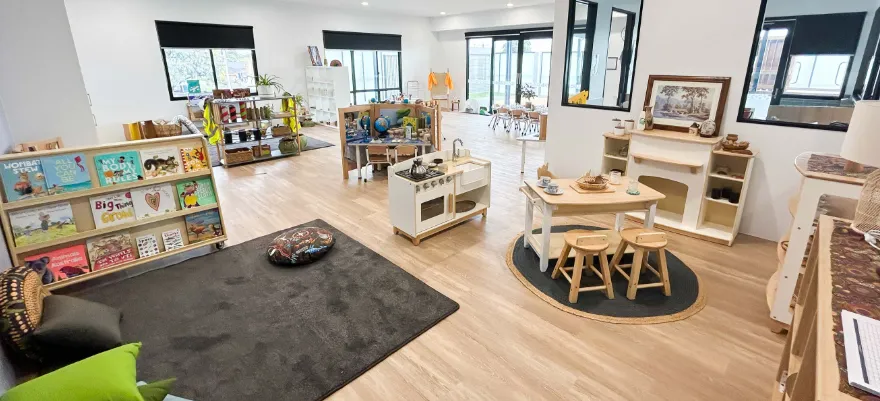
Choosing childcare is one of the hardest decisions a parent makes. You are trusting someone else with the most important person in your life. Getting it right matters. A childcare centre Werribee that fits your child means quality relationships, early learning, and safe routines. One that does not fit can cause distress, slow development, and stress for the whole family. According to the Australian Institute of Family Studies, over 72% of Australian children aged 0 to 5 use some form of formal care. That number keeps growing. Werribee is a fast-growing region in Victoria, which means more options and more decisions. Here is how to choose well.
What Qualification Level Should Werribee Childcare Educators Hold?
This is your baseline check. Under the National Quality Framework (NQF), all long day care centres must have a minimum proportion of qualified staff. At least 50% of educators must hold at least a Certificate III in Early Childhood Education and Care. One educator per room must hold, or be working towards, a Diploma.
Centres rated Exceeding the National Quality Standard (NQS) go beyond these minimums. They invest in ongoing training, mentoring, and professional development for their teams. Ask the director what percentage of educators hold a Diploma or Bachelor qualification. The answer tells you a lot.
How Does the Centre Approach Child Safety and Risk Management?
Every licensed childcare centre in Victoria must comply with the Education and Care Services National Law. That includes child protection obligations, supervision ratios, and incident reporting requirements. The legal baseline exists. What you want to assess is how a centre goes beyond it.
Ask about supervision during outdoor play. Ask how the centre handles allergic reactions. Ask what happens in an emergency. A centre that has clear, immediate answers to these questions has invested in safety culture, not just compliance paperwork.
What Is the Staff-to-Child Ratio in Each Room?
In Victoria, the required ratios are 1:4 for children under 36 months, and 1:11 for children aged 3 to 5. But meeting the minimum ratio is not the same as providing quality care. A good centre keeps ratios low. It is not uncommon for quality centres to run 1:3 in infant rooms.
Lower ratios mean more individual attention. More attention means better outcomes. Research from the Australian Children’s Education and Care Quality Authority (ACECQA) consistently shows that educator-to-child ratios are one of the strongest predictors of early childhood program quality.
Does the Centre Have a Curriculum Framework?
All Australian early childhood services follow the Early Years Learning Framework (EYLF), known as Belonging, Being, and Becoming. But how a centre applies it varies enormously. Some treat it as a document that sits on a shelf. Others build every room, every routine, and every interaction around its principles.
Ask to see the curriculum documentation. Look for evidence of intentional planning based on individual children’s interests, documented learning stories, and regular family updates on development. These are signs the team is genuinely implementing the framework, not performing it.
What Are the Fees and What Does the Centre Cost After the Childcare Subsidy?
The Australian Government’s Child Care Subsidy (CCS) covers a significant portion of fees for eligible families. In 2023, the government increased the subsidy for most families, with some eligible for 90% or more of fees covered. Your actual out-of-pocket cost depends on your income and activity level.
Ask the centre for their daily fee rate and their CCS registration status. Use the Services Australia CCS calculator to estimate your actual cost. Fees in Werribee generally range from 20 to 60 per day for long day care. Do not let fees be your only filter, but make sure you understand your real cost before enrolling.
How Does the Centre Communicate With Parents?
Daily communication is not optional. It is how you stay connected to your child’s day when you are not there. Most quality centres use a digital platform like Storypark, Kindyhub, or HiMama to share photos, learning observations, and daily reports.
Ask how updates are shared and how frequently. Ask how you get notified if your child is unwell or has an incident. A centre that communicates well makes you a partner in your child’s learning, not an outsider who picks them up at the end of the day.